
Blog

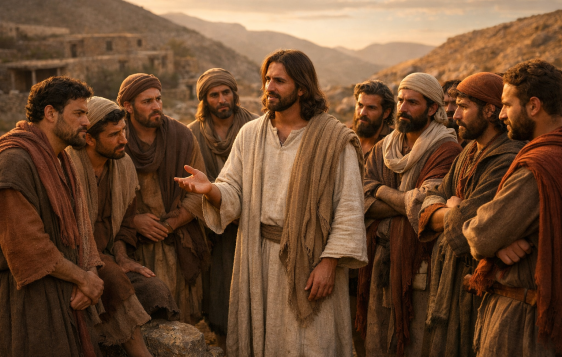
We all have flaws, but none of us like talking about them. We prefer to keep them as private as possible and gloss over them when they come to light. We pretend we’re better than our mistakes and shortcomings because we don’t want to be looked down upon. At the same time, we have a tendency to elevate other people above us. We internally recognize our flaws and think, “That person would never make the mistakes I’ve made.” But we all have flaws, and we all have room to grow.
When I was a child, my dad was an associate pastor at a church that held a monthly nursing home ministry. One Sunday afternoon, after our pastor finished his lesson, my dad told me and my brothers to go shake hands and greet the residents.
There was one problem: a particular woman in a wheelchair had a shih tzu in her lap, and when I was a kid, I was irrationally terrified of dogs. A crisis played out in my head in an instant: Should I face my fear and shake the woman’s hand, reaching around her dog to do so? Should I shake everyone else’s hand except hers, potentially making her feel bad but still technically obeying my dad’s instruction? Or should I run for the hills?
Unfortunately, the latter option won out in my anxious childhood brain. As soon as my dad’s back was turned, I hurried out to the nursing home’s front porch, just as I had often done during previous visits. My brothers followed.
About ten minutes later, my parents emerged and we all went to the car. As we were buckling in, my dad asked, “Did you do what I said and shake people’s hands?” I admitted that I had not.
He looked at me through the rearview mirror and asked, “Was it because you were scared of the dog?”
I was deeply ashamed of my admittedly silly reaction to a tiny lapdog, so rather than confess the truth, I said possibly the worst thing: “No, I just didn’t want to.”
Obviously I was punished, and even worse, my brothers were punished as well because they had followed my lead in disobeying. Had I been able to admit my fear, would the punishment have been less severe, or perhaps my offense forgiven altogether? Maybe. But, like everyone else, I struggle with admitting my flaws. And whether we confess them or not, we all have them.
Jesus’ disciples were no exception. Peter often got himself into trouble with his habit of talking before he thought. Judas Iscariot was a traitor. We don’t tend to think much about the rest of the disciples, but they had their share of failings too—some of them real doozies.
In Luke 9:37–56, we see quite a few of these failures happening in quick succession.
The day after the Transfiguration, Jesus and His inner circle—Peter, James, and John—came down off the mountain. A great crowd was waiting, including a man whose son was possessed by a demon that caused violent seizures. He explained that he had asked Jesus’ disciples to cast out the demon, but they had been unable to do so.
This is despite the fact that they had previously cast out demons on their two-by-two journeys earlier in this same chapter (Luke 9:1–6). Jesus corrected the disciples for their lack of faith (Matthew 17:17 reveals this further) and cast out the demon Himself. So the disciples’ first mistake was a lack of faith—relying on themselves rather than on God’s power to cast out the demon.
Jesus pressed this point by telling them that He would soon be “delivered into the hands of men,” meaning His death was approaching. But the disciples did not understand what He was saying. God had concealed the full meaning of His words from them because it was not yet time for them to understand the coming crucifixion.
However, their lack of understanding led to fear of asking for clarity. The disciples’ second mistake was being afraid to admit their confusion and ask questions. When we struggle to understand something about God, it is always okay to ask someone for help.
Sometime after this, a conversation arose in which the disciples began debating who among them was the greatest. This may be connected to the mother of James and John asking Jesus to let her sons sit at His right and left (Matthew 20:20–28). Or it may have been because Peter, James, and John had just gone up the mountain with Jesus and the rest of the disciples felt jealous.
Either way, they were arguing about who was the most important among them. Jesus recognized what was going on and called a child to Him. He told them that the greatest among them is the one who is the least of all. Humility and childlike faith are the keys to being great in the kingdom of heaven. The disciples’ third mistake was pride and self-importance. We should be careful to humble ourselves rather than chasing personal recognition or prestige.
Next, John came to Jesus and said, “We saw someone casting out demons in Your name, and we tried to stop him because he’s not one of us.”
Jesus corrected John by saying, “Whoever is not against you is for you.” In other words, if someone gives testimony and shows evidence that they believe in Jesus, differences in approach are secondary—you are on the same side.
This kind of division was common among disciples of rabbis in those days. Many Pharisees and scribes disagreed on doctrine, and their followers often clung tightly to their teacher’s interpretation while rejecting everyone else’s. Jesus did not want this attitude among His followers.
The disciples’ fourth mistake was an exclusive attitude toward ministry. We should be careful not to exclude people simply because they handle church, ministry, or Christian faith differently than we do—so long as the fruit of obedience to Jesus is evident.
After that, John was put on the spot again, along with his brother James. They were traveling through Samaria, and one of the villages they entered did not welcome Jesus. This enraged the zealous brothers, and they asked Jesus if they could call down fire from heaven on the unbelievers.
Jesus rebuked them and moved on. The disciples’ fifth mistake was choosing wrath instead of mercy. When an unbeliever acts like an unbeliever—provided they are not harming others—we should lean toward mercy and love rather than harsh retaliation.
It does little good to rant and rage at those who are lost, because they do not yet know any better. Instead, show love, compassion, and—when appropriate—gentle correction.
These five mistakes the disciples made, one after another, serve as powerful learning moments for us. These mistakes are easy to make as followers of Jesus. But because we can recognize them, we should examine our own hearts and ask God to help us overcome them.
Copyright © 2025 Lifeword.org. All rights reserved. No part of this article may be reproduced or reprinted without permission in writing from Lifeword.org