
Blog

SNAP!
I heard that eerie sound for the second time in just the short time I had been in the building. There was no doubt what that sound was, and it made me cringe.
A mousetrap.
I had put a little storage building out back, and it hadn’t taken long for the mice to start making their home in my new shed.
How were they getting in?
That was obvious. If you took one look, you would see it too.
The foundation wasn’t straight at all. It was concrete, but it had uneven lumps and bumps. There wasn’t a single flat surface anywhere. When you looked at the base, you could tell why. The bricks that had once acted as the corners were broken, uneven, and unstable. With all of this combined, the shed had gaps and lacked structural strength.
I’ll admit it—I was cheap. I skimped on starting fresh. I should have called a professional. I should have known how important the cornerstone and a solid foundation were. But I settled. I said, “It’s no big deal.”
But the sound of that mousetrap snapping told me it was absolutely a big deal.
Ephesians 2:20–22
“Together, we are His house, built on the foundation of the apostles and the prophets. And the cornerstone is Christ Jesus himself. 21 We are carefully joined together in Him, becoming a holy temple for the Lord. 22 Through Him you Gentiles are also being made part of this dwelling where God lives by His Spirit.”
Any builder will tell you how important the cornerstone and foundation are to the success of a building project.
A cornerstone is the first stone set in the corner of the foundation, becoming part of the foundation itself. It serves as the reference point for aligning all other stones and supporting the structure. It is not placed on top of an already built foundation, but laid first, forming the base from which everything else is built. In traditional masonry, the cornerstone anchors the entire building.
So what is Paul saying in these verses in his letter to the Ephesian church?
He is emphasizing the importance of the church having a firm foundation—and that foundation must be Christ. If He, the cornerstone, were removed, everything would collapse.
The foundation of the church is built on the work of the apostles and prophets—the men God chose to be His mouthpieces to proclaim His truth. They revealed the truth of the Trinity: God the Father, His Son Jesus, and the Holy Spirit. They proclaimed the world’s need for a Savior and how God sent His only Son to be born in the flesh and become the sacrifice for the sins of mankind. They testified that Jesus was crucified, buried, and rose from the dead. They taught how to love others and how to live as Jesus lived. They also shared His commission—to go and make disciples, to share the gospel, and to teach others how to follow Christ—because the Lord is returning.
Paul wanted the church to understand that they were vital to God’s mission and that everything must be anchored in Christ alone. Not personal agendas. Not comfort. Not desires. Christ alone.
If they remained faithful to the foundation laid by the apostles and prophets, the church would stand strong together and remain a holy temple for the Lord.
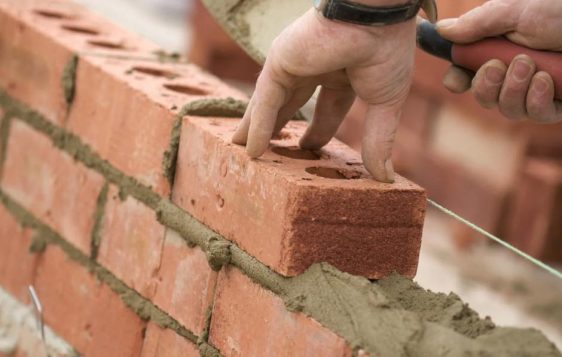
Brick by brick. Person by person.
A building is weaker when even one brick is missing. Each brick has a purpose and a place. When multiple bricks are missing, the structure becomes unstable.
The church is not a building—it is people.
You are needed in the church. God has given you unique gifts and talents to be used for His glory. When God’s people work together, using those gifts for Him, He is glorified, and His kingdom advances.
So today, we must ask ourselves this question: Are we building up the church, or are we tearing it down?
“Christ alone, Cornerstone
Weak made strong in the Savior’s love
Through the storm, He is Lord
Lord of all”
Copyright © 2025 Lifeword.org. All rights reserved. No part of this article may be reproduced or reprinted without permission in writing from Lifeword.org