
Blog

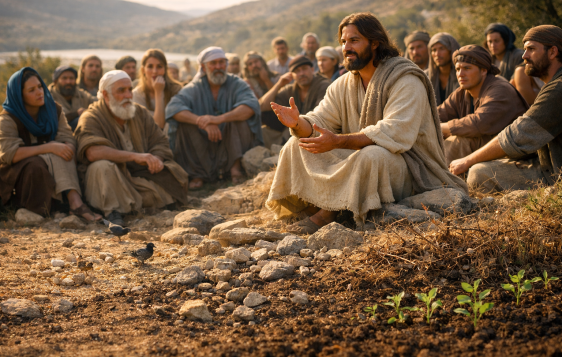
It’s no secret to anyone who knows me that I love to tell stories. I am a writer—not just a blog writer. I studied journalism in college, and I am also an author. As an author, I tell stories in long-format ways. My books tend to range from 90,000 to 120,000 words, and one of my more recent manuscripts nearly reached 200,000 words in its second draft. I don’t just enjoy writing stories; I love telling them verbally, too. And while I can be concise when telling a story, I sometimes tend to get long-winded that way as well.
Some people are excellent storytellers. With their words, they can craft images in your mind and make you feel as though you were actually there when the story took place. They can almost make you feel, taste, and smell the place they were in, hear the voices they heard, and experience the events they lived through.
My grandfather is one such excellent storyteller. He has experienced some unbelievable things in his lifetime, and he can recount them with such skill and clarity that I almost feel as if I experienced those things myself. I love hearing his stories. Some time ago, I compiled a document of stories he told me so that at least some of his experiences will remain in the world after he passes.
This is the same reason Luke recorded the life of Jesus in his Gospel. But Luke is not the storyteller we’re focusing on here. Instead, we are looking at the stories Jesus Himself told—His parables—and why He told them.
In Luke 8:4–21, Jesus began telling a story about a farmer sowing seed. He scattered the seeds generously across the ground. The more seeds he scattered, the greater the chance that some would take root. He sowed without concern for the condition of the soil. Some seeds landed on the hardened path and could not take root, so birds quickly snatched them away. Others fell on rocky ground. They sprouted briefly, but the soil was too shallow to retain moisture, and the plants soon withered. Still others fell among thorns. As they grew, the thorns choked them out, and they died as well. But some of the seeds fell on good, fertile soil, where they grew and produced fruit.
This message confused His listeners, including the disciples. Jesus explained that the seed represented the Word of God. He allowed His disciples to understand these truths, but He spoke in parables so that those who listened without genuine intent would not understand. In this way, the parable was also about the listeners themselves. Those who had ears to hear—those who truly desired to learn—were the good soil. Those who were insincere represented the other types of soil: those who opposed Jesus, those who followed Him only for miracles, or those who would be easily distracted by worldly concerns.
Often, this passage is taught with believers cast in the role of the farmer. We are encouraged to go out and sow the seeds of the Gospel, and that is certainly something we should do. However, placing ourselves as the farmer misses Jesus’ primary intent. This passage is not a command to sow the seed but a warning—even a condemnation—of those who willfully refuse to understand His teaching. It is also about more than salvation alone. It addresses how we receive the Word of God whenever it is taught. All of us exist as a form of soil, even those who have followed Christ for decades. The parable calls every listener to examine their heart and ensure it is open to receiving truth.
Jesus then told another parable, this one about a lamp. Many recognize it from the children’s song “This Little Light of Mine,” but few realize that the parable of the lamp is directly connected to the parable of the seeds. Jesus explained that no one lights a lamp and hides it. Instead, it is placed where those who enter can see the light. This parable is often taught as a command to shine our light in the world. While that application is not incorrect, it is not the primary point here. In this passage, as in the parable before it, we are not the source of truth—we are its recipients. Jesus was explaining that He did not use parables to hide truth but to reveal it to anyone willing to seek understanding. Just as the seed grows in good soil, the light is visible to those who truly want to see it.
Finally, we encounter an event that initially seems unrelated. Jesus is told that His mother and brothers are trying to see Him, but the crowd is too large for them to reach Him. The connection becomes clear when Jesus says that His true mother and brothers are those who hear the Word of God and obey it. In other words, they are the ones with good soil and open eyes for the light. Jesus was not rejecting His family; rather, He was emphasizing the priority of faith and obedience. At that time, His half-brothers likely did not yet believe. They were not seeking the light or prepared to receive it. With His ministry nearing its end, Jesus focused His time on those who were receptive to His message.
This passage serves as a powerful reminder for us today. We must have hearts that are open and tender when God’s Word is taught. We must guard against becoming hard-hearted, cynical, or distracted. When we genuinely desire to know Him and follow Him, He will reveal Himself to us.
Copyright © 2025 Lifeword.org. All rights reserved. No part of this article may be reproduced or reprinted without permission in writing from Lifeword.org
- Addiction (44)
- Bible Devotionals (413)
- Blog (3184)
- Christian Living (1395)
- Church Life (171)
- Culture (332)
- Devotionals (411)
- Discipleship (353)
- Evangelism (255)
- Lifeword Info (3)
- Marriage and Family (219)
- Ministry (201)
- Problems of Life (686)
- Questions About Christianity (1)
- Salvation (278)
- Spiritual Growth (650)
- Spiritual Questions (1)