
Blog

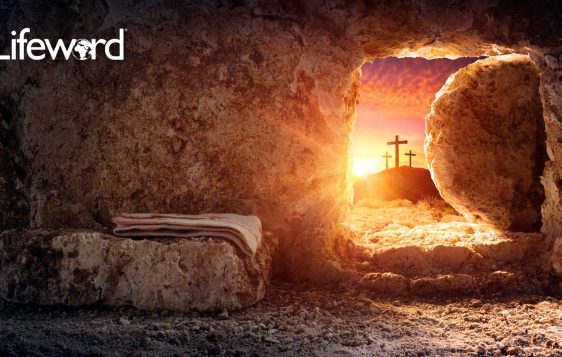
“Truly I tell you, unless a grain of wheat falls to the ground and dies, it remains by itself. But, if it dies, it produces much fruit.” John 12:24 (CSB)
“For sure, I tell you, unless a seed falls into the ground and dies, it will only be a seed. If it dies, it will give much grain.” John 12:24 (NLV)
As I read this passage during a Lenten study, a strange memory kept popping up—pumpkins. Why would I think about pumpkins when I am preparing my heart for Easter? That’s a great question. Let me see if I can help connect those dots.
As our children got older, I found they were less excited about participating in some of the “cheesy” traditions I always enjoyed with them. I do have an extra dose of love for cheesiness, though, and that is not the most appealing thing for teenagers.
Over the years of our children’s lives, I really loved our family trips to the pumpkin patch—picking out just the right pumpkin to carve, riding on hay bale-lined trailers with our haul, drawing outlines for our chosen designs, using our flimsy carving kits to bring our artistic blueprints to life, and lining our porch with our little pumpkin families.
I especially loved kicking the cheese level up an extra notch by reading a book that mirrored the process with the way we can ask God to clean out our hearts and let His light shine brightly through us to the world. (It is a beautiful analogy…just maybe not as enjoyable for our children to hear every year.)
At some point, our oldest kids decided the whole pumpkin patch and hayride thing was a little childish, and our youngest son has sensory issues and wouldn’t touch the slimy pulp of a pumpkin to save his life. So, we skipped that tradition.
But one day, our oldest son and three of his friends chose to carve pumpkins in our backyard for fun. Those “embarrassing” things Mom “made them do” became fun when it was their choice to act like kids again.
I tried not to smile too much, lest I ruin the fun, as I watched them carving pumpkins and laughing through the back doors. They even showed off their creations on the porch. I had flashbacks to the little kid days.
What I did not consider was that the previous activities were planned by me—an adult—when they were little, which meant I carefully cleaned up after the fun was over. This time, it didn’t even cross my mind. I was so entranced by the return of youthfulness that I did not think about that detail until we went outside to grill one day. I held my breath and tossed the chunks of gross, moldy pumpkin leftovers into a garbage bag.
About a month later, we had cute little pumpkins growing in our backyard—multiple real pumpkins—our own tiny pumpkin patch!
It amazed me that the few seeds I did not throw away, without any real effort from me or anyone else, somehow took root and multiplied right there in the backyard. If I had taken the time to make sure I removed every seed, it would have been a different story. Do you see where I am going with this?
In Jesus’ last days, during the Passover Festival, there were Greeks who requested time with Him. I’ve read that who these people were is not exactly certain, but they were not Jewish and therefore not allowed to participate in all aspects of this festival—yet they were there. Perhaps they wanted to make the best use of the time they were allowed, so they respectfully asked for time with Jesus. When Andrew and Philip told Him these people wanted to speak with Him, He replied that the hour had come for Him to be glorified. The time had come for His glorification to allow both Greeks and Jews to become part of His family.
Jesus said, “Truly, truly I say to you, unless a grain of wheat falls into the earth and dies, it remains alone; but if it dies, it bears much fruit. Whoever loves his life loses it, and whoever hates his life in this world will keep it for eternal life…Now is My soul troubled. And what shall I say? Father, save Me from this hour? But for this purpose I have come to this hour. Father, glorify Your name.” (John 12:24–28a)
Jesus was headed to glory. He—the seed or grain of wheat—knew that He had to die so that His fruit could multiply. He had already chosen to humble Himself, leaving His place in heaven to descend to earth and take on human form, emptying Himself and becoming a servant. Now He was choosing to be obedient—even to the point of death, death on a cross (based on Philippians 2:5–8).
Jesus chose to come to this earth, submit to the limits of mortality, die the death we deserved as payment for our sins (even though He had no sin), be buried, and rise again three days later in glory—multiplying His kingdom through this act of redemption.
I put no effort into the tiny pumpkin patch in my backyard, and its symbolic picture is nothing compared to what Jesus did for us. But the idea that those seeds died and multiplied into my tiny pumpkin patch is a simple illustration of the truth that a seed must die to multiply. None of the seeds that were thrown away, remaining alone, became anything.
Jesus chose to be the seed we needed. For the purpose of saving us all from the burden of our sin, He lived among us, walked with humanity sinlessly, and did not cling to His equality with God during His time on earth. Instead, He fulfilled His purpose of redeeming us. He died and rose again to grow an abundant kingdom—one that we have not earned and could never deserve to be part of. We simply have to recognize how much we need Him and receive the life He offers.
Copyright © 2025 Lifeword.org. All rights reserved. No part of this article may be reproduced or reprinted without permission in writing from Lifeword.org
- Addiction (44)
- Bible Devotionals (413)
- Blog (3187)
- Christian Living (1395)
- Church Life (171)
- Culture (332)
- Devotionals (411)
- Discipleship (353)
- Evangelism (255)
- Lifeword Info (3)
- Marriage and Family (219)
- Ministry (201)
- Problems of Life (686)
- Questions About Christianity (1)
- Salvation (278)
- Spiritual Growth (650)
- Spiritual Questions (1)